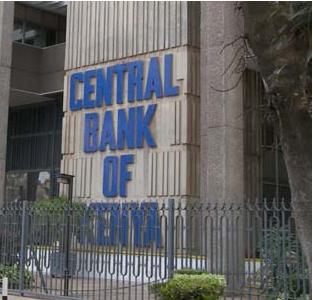
The Central Bank of Kenya has kept its benchmark interest rate unchanged at 8.75 per cent, opting to hold policy steady as higher global energy prices and the conflict in the Middle East threaten to push up inflation.
The Monetary Policy Committee (MPC) maintained the Central Bank Rate (CBR) at its August 11 meeting, saying the current monetary policy stance remained appropriate to keep inflation expectations anchored and support exchange-rate stability.
The decision comes as global growth is expected to slow to 3 per cent this year from 3.5 per cent in 2025, with the Central Bank of Kenya (CBK) citing higher energy prices, trade policy uncertainty and the Russia-Ukraine war as key risks to the global economy.
Global inflation is also projected to rise to 4.7 per cent in 2026 from 4.1 per cent last year, driven largely by higher energy and transport costs.
In Kenya, inflation remained within the target range in July, edging up to 6.5 per cent from 6.4 per cent in June. Core inflation was broadly stable at 3.2 per cent, while non-core inflation eased to 15 per cent from 15.1 per cent.
The CBK said food prices remained a concern, with higher prices for vegetables including Irish potatoes, tomatoes, kales, cabbages and onions keeping pressure on household costs.
The apex bank expects inflation to remain within its target range in the near term, assuming the Middle East conflict de-escalates, with stable food and fuel prices, a stable exchange rate and government measures such as fuel subsidies and a temporary VAT cut on fuel providing support.
The economy expanded by 5.3 per cent in the first quarter of 2026, up from 4.9 per cent in the same period last year, with stronger growth across industry and services.
The CBK has raised its full-year growth forecast to 4.9 per cent in 2026 and 5.3 per cent in 2027, from 4.6 per cent in 2025, supported by industrial activity, resilient services and agriculture.
Credit conditions have also continued to improve following the decline in lending rates. Commercial banks’ lending to the private sector grew by 10.2 per cent in July, compared with 10.6 per cent in June and a contraction of 2.9 per cent in January 2025.
Average commercial bank lending rates fell to 14.3 per cent in July from 14.4 per cent in June and 17.2 per cent in November 2024.
The banking sector’s gross non-performing loan ratio also improved to 14.6 per cent in July from 15.4 per cent in April and 17.6 per cent in August 2025, with declines recorded in manufacturing, construction, trade, agriculture and real estate sectors.
The CBK said the banking sector remained stable, supported by strong liquidity and capital adequacy, while banks continued to make provisions for bad loans.
The country’s external position, however, has weakened. The current account deficit widened to an estimated 3 per cent of GDP in the 12 months to June 2026, from 1.9 per cent in the comparable period of 2025.
The deterioration was driven by a wider trade deficit and lower secondary income transfers. Goods exports rose 8.9 per cent, led by horticulture, tea, machinery and transport equipment, but imports grew faster at 13.1 per cent, reflecting higher purchases of food, mineral fuels and intermediate and capital goods.
Diaspora remittances fell by 2.4 per cent, while the current account deficit is projected to remain at 3 per cent of GDP in 2026, compared with 2.1 per cent last year.
Despite the wider deficit, the CBK said the position was expected to be more than fully financed by financial and capital inflows, resulting in an overall balance of payments surplus of $2.485 billion this year.
Foreign exchange reserves stood at $15.249 billion, equivalent to 6.3 months of import cover, providing a buffer against external shocks.
The MPC said business sentiment remained positive, with its July surveys showing sustained optimism over economic activity and growth prospects over the next 12 months.
However, businesses continued to flag the Middle East conflict, high energy costs and wider global uncertainty as key risks.
The MPC said it would continue monitoring global oil prices and their potential second-round effects on inflation, as well as developments in the domestic and global economies.
The committee is scheduled to meet again in October 2026.

Press Release: Monetary Policy Committee Meeting